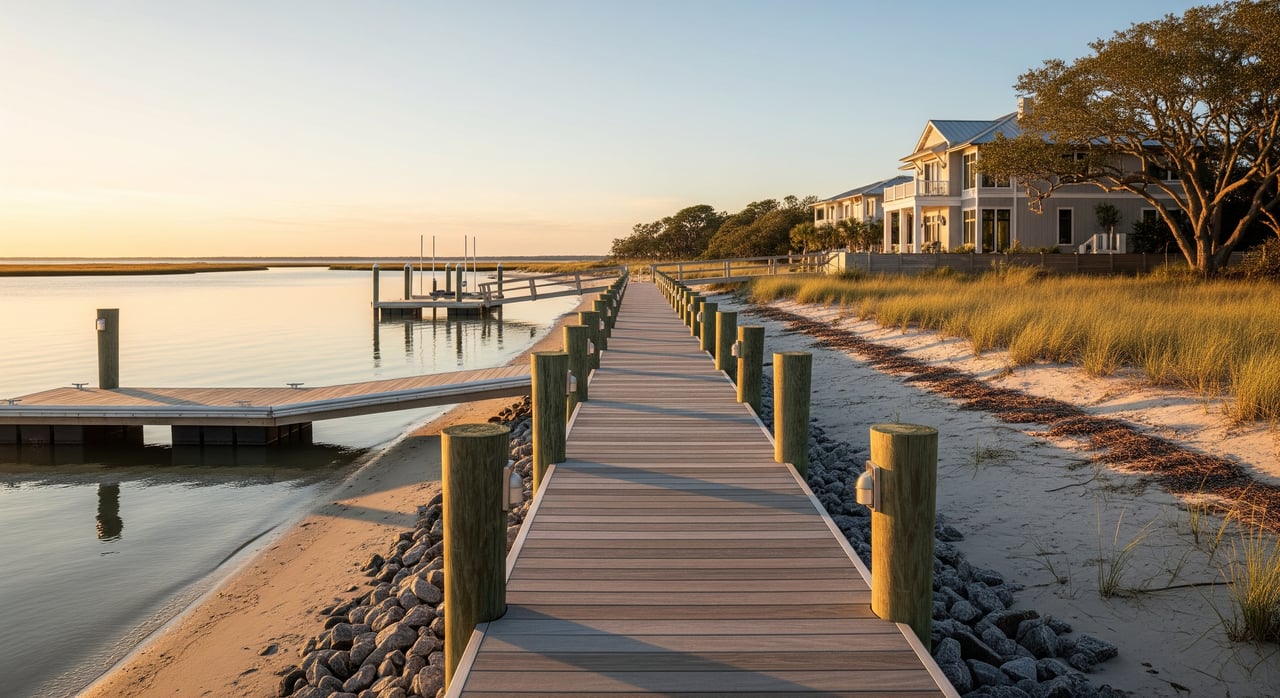
Planning a pier, riprap, or living shoreline at Saw Pen Point can feel overwhelming at first. You want clear steps, realistic timelines, and confidence that your plans will pass review without surprises. In this guide, you will learn exactly how the Joint Permit Application works in Virginia Beach, who reviews your project, what to submit, and how to avoid delays that cost time and money. Let’s dive in.
Who regulates shoreline projects
Several agencies review shoreline work in Northwest Virginia Beach, each with different roles.
- Virginia Marine Resources Commission (VMRC): State authority over tidal wetlands and structures in state tidal waters. VMRC issues the Joint Permit Application and coordinates with other agencies.
- U.S. Army Corps of Engineers (USACE, Norfolk District): Federal authority for structures and work in navigable waters and dredge or fill in waters and wetlands. Many pier, riprap, and living shoreline projects need a federal authorization.
- City of Virginia Beach Wetlands Board: Local review of shoreline impacts and permits under local ordinances. The board may hold a public hearing and set conditions.
- Virginia Department of Environmental Quality (VADEQ): Issues Section 401 Water Quality Certification when a federal action requires it.
- Federal resource agencies: NOAA/NMFS and U.S. Fish & Wildlife Service may review projects that could affect protected species or essential fish habitat.
How the Joint Permit Application works
Virginia uses a single Joint Permit Application (JPA) to route your project to VMRC, USACE, the City Wetlands Board, VADEQ, and other reviewers. You submit one package to VMRC with your drawings, narrative, and any surveys. The agencies review in parallel and may issue separate decisions with conditions. Some projects qualify for general permits, which can be faster. Others require individual permits and public notice, which usually take longer.
Step-by-step for Saw Pen Point projects
Pre-application consultations
A short meeting early with the right people can save weeks later.
- Contact City of Virginia Beach Wetlands Board staff to confirm submittal deadlines and whether a public hearing is likely.
- Speak with VMRC permit staff to confirm permit pathways and living shoreline preferences.
- Ask the USACE Norfolk District about federal jurisdiction and whether a Nationwide or Regional General Permit applies.
- Gather baseline information: property deed, recent shoreline survey, and the locations of mean high water and mean low water. Confirm title lines and who owns the submerged land.
- Check site conditions for submerged aquatic vegetation, shellfish beds, or rock outcrops. These findings can change your design and review path.
Prepare and submit the JPA
Your first submittal sets the tone for the entire process.
- Complete the VMRC JPA and attach a clear project narrative.
- Show exactly what you propose: pier length and alignment, piling type, decking material, riprap extent and stone size, living shoreline cross-sections, any dredging, and the construction access route.
- Include high-quality plan and section drawings with dimensions, staging areas, and erosion and turbidity controls.
- VMRC distributes your JPA to participating agencies, including USACE and the City Wetlands Board.
Agency review and public notice
Agencies review your application at the same time.
- Eligible projects may proceed under a state or federal general permit. Others require individual permits and public notice.
- The Virginia Beach Wetlands Board typically meets on a monthly cycle. Your project may be scheduled for a hearing depending on the scope and calendar.
- Public notices invite comments from neighbors and stakeholder groups. Objections can extend the timeline.
Decisions, conditions, and appeals
You may receive approvals with standard and project-specific conditions.
- Expect conditions such as seasonal work windows, turbidity controls, seagrass protection, and as-built surveys.
- Some approvals require mitigation or monitoring. You might need planting plans and maintenance commitments for a living shoreline.
- If a decision is disputed, appeal options exist and can add significant time and cost.
Documents you will need
Submitting a complete, organized package speeds review and reduces requests for more information.
Administrative
- Completed JPA signed by the owner and applicant
- Cover letter and project narrative, including alternatives considered
- Proof of property ownership, deed, or recorded plat
- Agent authorization if a consultant submits for you
Location and boundaries
- Scaled site plan with property lines, title lines, mean high and low water, existing structures, and proposed work
- Shoreline and topographic survey tied to a vertical datum and known benchmarks
- Distances to adjacent docks, channels, and navigation markers
Construction drawings
- Pier or dock plan with length, width, piling size and spacing, handrails, and ramps
- Methods for pile driving or drilling, anchoring, decking fasteners, access matting, and staging
- Living shoreline sections with slope, substrate, plant species, stone sizing, and erosion control details
- Riprap design with elevations, stone gradation, filter fabric, toe details, and limits of disturbance
Environmental surveys
- Submerged aquatic vegetation survey, timed for the growing season as required
- Shellfish mapping or presence notes, including public grounds or leases
- Benthic and habitat notes if relevant
- Biological assessment if species or habitat of concern are present
Engineering and sediment handling
- Cross-sections and bathymetry if dredging or toe grading is part of the work
- Sediment and turbidity control plan, including silt curtains and timing to avoid sensitive seasons
- Access and equipment parking plan with upland vegetation avoidance and restoration
Mitigation and monitoring
- Mitigation plan if there are unavoidable impacts
- Long-term maintenance plan for plantings and structure components
- As-built survey requirements
Local items
- Proof of required local notices or postings
- HOA approvals if your property is subject to shoreline rules
Timelines and fees in Virginia Beach
Your schedule depends on project type, meeting cycles, and resource issues.
- Pre-application: A few days to a few weeks to coordinate with staff.
- Completeness review: Agencies usually accept or request more information within a few weeks.
- Local board scheduling: Add 4 to 8 weeks if a public hearing is needed, depending on the meeting calendar.
- Technical review: State and federal review proceed in parallel. General permits move faster than individual permits.
- Additional consultations: Water Quality Certification or species consultations can add weeks to months.
- Overall timeline: Straightforward projects may finish in weeks to a few months. Projects with submerged aquatic vegetation, shellfish grounds, dredging, or mitigation often take several months or longer.
Fees vary by agency and project size.
- State and local: VMRC and the City of Virginia Beach have separate fee schedules. Ask for current schedules during pre-application.
- Federal: USACE does not charge an application fee. If mitigation is required, mitigation bank credits or in-lieu fees can add cost.
- Programs: Living shoreline incentives or cost-share grants may be available at times. Confirm current options with staff.
Red flags that trigger extra review
Plan for added time if any of these apply:
- Submerged aquatic vegetation in your project area
- Mapped shellfish beds or proximity to public shellfish grounds or leases
- Dredging or fill below the water
- Potential effects on threatened or endangered species or essential fish habitat
- Work near navigation channels or seaward of certain limits
- Large or complex living shoreline designs that require monitoring
Common delays and how to avoid them
You can prevent many slowdowns with a strong first submittal.
- Incomplete or unclear drawings: Provide scaled, legible plans and sections with datum and cross-sections.
- Wrong-season surveys: Time submerged aquatic vegetation and shellfish surveys for the correct season and include the results at submittal.
- Uncertain title lines: Verify title lines and submerged land ownership with a current survey and agency input.
- Skipping pre-application: Meet with VMRC, USACE, and City staff before you apply to identify issues early.
- No alternatives analysis: If you propose riprap, document why a living shoreline is not practicable.
- Neighbor objections: Talk with adjacent owners and your HOA in advance to resolve concerns before a hearing.
- Underestimated mitigation: Ask about mitigation expectations and options in the Norfolk District before finalizing plans.
Buyer and owner checklist for Saw Pen Point
Use this quick checklist during due diligence or early design.
- Request a recent shoreline survey with title lines and encroachments.
- Ask the seller or HOA for past permits and related documents.
- Confirm whether submerged aquatic vegetation or shellfish beds are present.
- Schedule pre-application calls with VMRC and the City Wetlands Board.
- Hire a shoreline consultant or coastal engineer with Virginia Beach and USACE Norfolk District experience.
- Build a complete JPA with seasonal biological surveys and clear engineering drawings.
- Budget time for consultations, possible mitigation, and contingencies.
- Consider a living shoreline early. Agencies favor it where feasible.
Practical tips by project type
Piers and private docks
- Keep alignments and lengths within typical local patterns to reduce navigation concerns.
- Show distances to adjacent docks and channels to address safety and access.
- Include construction access and turbidity controls in your plan set.
Riprap stabilization
- Provide stone size, gradation, filter layer, and toe details.
- Be ready to explain why a living shoreline is not feasible at your site.
- Define limits of disturbance and restoration for upland areas.
Living shorelines
- Include slope, substrate, plant palette, and stone sizing where needed.
- Add a maintenance and monitoring plan for plantings.
- Living shorelines are often favored where practicable, which can reduce review friction.
Next steps
If you are weighing a dock, riprap, or a living shoreline at Saw Pen Point, start with pre-application calls and a clean survey. Build a complete JPA package with seasonal surveys and clear drawings, and plan for the local board’s meeting cycle. If you want guidance on feasibility and how permitting may affect your purchase or sale timeline, reach out to a local waterfront specialist. Let’s connect to align design, permitting, and your transaction goals.
Ready to move forward with a plan that saves time and avoids surprises? Contact Unknown Company to discuss your shoreline project and next steps.
FAQs
Do I need permits for a private pier at Saw Pen Point?
- Yes. Piers in tidal waters typically require review through the Joint Permit Application by VMRC, USACE, and the City of Virginia Beach Wetlands Board, and may involve public notice and conditions.
How long do shoreline permits take in Virginia Beach?
- Simple projects under general permits can finish in weeks to a few months, while projects with submerged aquatic vegetation, shellfish grounds, dredging, or required consultations often take several months or longer.
Who files the Joint Permit Application for a homeowner?
- You can file as the owner, or authorize a consultant or builder to submit on your behalf, but the package should include owner signatures and complete plans and surveys.
Are living shorelines preferred over riprap?
- Living shorelines are favored where feasible, so if you propose riprap you should document why a softer approach is not practicable and provide engineered details to limit impacts.
What surveys are usually required for shoreline projects?
- Common needs include a shoreline survey with mean high and low water, seasonal submerged aquatic vegetation surveys, shellfish mapping or presence notes, and cross-sections or bathymetry if dredging is involved.
What fees should I expect for permits?
- VMRC and the City of Virginia Beach have separate fee schedules, USACE does not charge an application fee, and mitigation or monitoring commitments may add cost depending on project impacts.