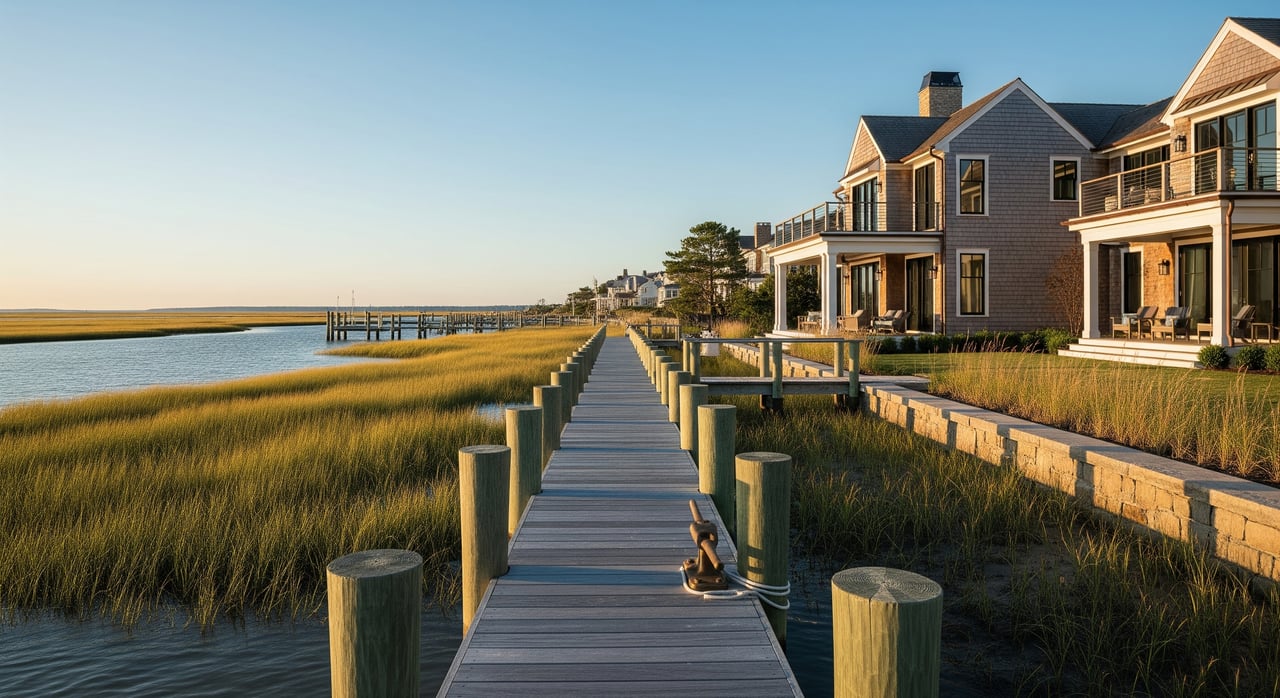
Shopping for a waterfront home in East Beach and not sure what all the dock and shoreline terms mean? You are not alone. In 23518, the right details can make daily boating simple or turn it into a headache. This guide breaks down the key terms you will see in listings, how they affect usability and value, and what to verify before you write an offer. Let’s dive in.
The waterfront terms that matter
Bulkhead
A bulkhead is a vertical shoreline wall, often timber, concrete, vinyl, or steel. It holds soil in place and protects against waves and erosion.
- What to check: material, visible condition, age, any bowing or cracking, drainage behind the wall, tiebacks, and signs of scour at the base.
- Why it matters in East Beach: Parts of Ocean View face open-bay energy, so bulkheads see higher waves and storm surge than sheltered rivers.
- Value impact: A failing bulkhead can shrink usable yard, add near-term costs, and limit plans to extend a pier or add a lift.
Riprap
Riprap is a sloped layer of stone along the shoreline that absorbs wave energy and reduces erosion. It may be used with or instead of a bulkhead.
- What to check: linear footage, rock size and placement, slope, stability, vegetation, and any undercutting.
- Why it matters in East Beach: It is often used where vertical walls are not ideal. Regulators in Virginia encourage living shoreline approaches where feasible.
- Value impact: Often lower maintenance than some timber walls and better for habitat, but it can limit simple beach-style access and may require stairs.
Mean low water depth (MLW or MLLW)
Mean low water depth is the water depth at the dock measured at a standard low tide. MLS notes like “6 ft at MLW” tell you how much clearance you have at the lowest typical tide.
- What to check: the depth reported at MLW or MLLW, how it was measured, seasonal shoaling, and whether you must cross a channel to reach deeper water.
- Why it matters in East Beach: Shoaling and storms can shift depths. MLW is the conservative number you should use to judge boat fit.
- Value impact: Deeper MLW supports larger boats and broadens resale appeal. Shallow MLW may require a longer pier or reliance on a marina.
Pier length
Pier length is the linear distance from shore or bulkhead to the pier’s end, often where MLW depth is reached.
- What to check: length in feet, fixed vs. floating structure, pile condition, deck width, stairs, distance to deeper water, and any easements or rights-of-way.
- Why it matters in East Beach: You will often see “pier 120 ft to MLW.” The length determines if you reach usable depth for your vessel.
- Value impact: Longer piers can reach better depths but add cost and maintenance. Very long piers may face length limits in permits.
Lift capacity
Lift capacity is the weight rating of a boat lift, usually shown in pounds.
- What to check: the rated capacity, overall condition, how it is mounted, electrical supply, and whether it fits your boat’s weight, length, and beam.
- Why it matters in East Beach: A lift protects your hull and helps avoid wake or grounding damage. Upsizing may require structural and electrical upgrades.
- Value impact: A properly sized, working lift adds value and convenience. Undersized or nonfunctional lifts reduce utility for larger boats.
East Beach tides, permits, and policy
Norfolk experiences a sizable tidal range and some of the highest rates of relative sea-level rise on the East Coast. You can view local tide datums and trends through NOAA Tides & Currents, and regional sea-level research through the Virginia Institute of Marine Science. These trends influence bulkhead height, pier freeboard, and lift elevation decisions.
Before altering a shoreline or dock, plan for permits. In Virginia, the Virginia Marine Resources Commission oversees docks, piers, riprap, bulkheads, and living shorelines in state tidal waters. Some projects also require federal review by the U.S. Army Corps of Engineers. Locally, the City of Norfolk administers zoning, building permits, setbacks, stormwater controls, and floodplain rules.
Many East Beach properties fall within FEMA-designated flood zones. You can verify zones and elevation data using the FEMA Flood Map Service Center. Bulkhead condition, dock elevations, and lift heights can affect risk profile and long-term maintenance planning.
Virginia policy increasingly favors living shorelines where feasible. If you rebuild an older wall, updated standards may apply, which can change design, height, or materials. That often increases replacement complexity and cost, so document what is already permitted and built.
What MLS phrases really mean
Listing remarks can be helpful, but you should confirm the details and the source of each claim.
- “Deep water”
- Ask for depth expressed to MLW or MLLW and how it was measured. “High tide depth” is not enough for safe clearance.
- “Dock to MLW” or “Pier to MLW [X ft]”
- Confirms the pier’s goal is to reach MLW depth. Verify the endpoint, the actual depth, and whether any channel crossing is needed.
- “Lift included — XX lb”
- Request a photo of the manufacturer’s label and lift service records. Confirm the capacity matches your boat’s fully loaded weight and beam.
- “Bulkheaded” or “bulkhead replaced in [year]”
- Ask for permits, materials, and any engineering or inspection reports. “Rebuilt” can range from patch to full replacement.
- “Riprap shore protection”
- Ask when installed, under what permit, and whether the rock has shifted or settled.
- “No permits on file” or “Permits unknown”
- Treat as a red flag. Future repairs will require permits and possibly mitigation under current rules.
Example interpretation:
- MLS: “Pier 140 ft to 7 ft MLW, private lift 6,000 lb, bulkhead replaced 1998.”
- Questions: Is the 7 ft MLW at the pier end and measured by survey, or is it charted? Is there a maintained channel? Is the 6,000 lb lift operational and sized for your boat’s weight and beam? A 1998 timber bulkhead may be approaching end-of-life. Get a marine inspection.
Usability, value, and insurance
- Bulkheads: A sound, recent bulkhead adds value and reduces near-term expenses. Poor condition can impact insurability and resale.
- Riprap: Often viewed as protective and lower maintenance than older timber walls. It may limit easy beach entry but can be more resilient after storms.
- MLW depth: Deeper low-water depth expands your boat options and marketability. Shallow sites may rely on a community marina or longer pier.
- Pier length: Adequate length that reaches navigable depth improves day-to-day use, but longer structures cost more to maintain and may face permit caps.
- Lift capacity: A working lift sized for common local boats is a convenience premium. If undersized, factor in replacement or upgrade costs.
If your access depends on a maintained channel, ask who is responsible for dredging and how often it occurs. For private channels or shoals, costs typically fall on the owners who benefit from the access.
Due diligence checklist
Request these documents from the seller or listing agent:
- VMRC, City of Norfolk, and USACE permits for the dock, bulkhead, riprap, and lift.
- As-built pier plan or survey that shows length and the pier endpoint.
- Maintenance records for the bulkhead, riprap, pier, pilings, and lift.
Order these inspections or reviews:
- Marine structural inspection of the pier, pilings, and lift mechanics.
- Shoreline or bulkhead inspection to assess toe scour, drainage, and elevation relative to yard grades.
- Sonar or boat survey to confirm MLW/MLLW depth where you plan to moor.
- Title search for riparian rights, easements, and any community dock agreements.
- Flood zone verification and an elevation certificate review for insurance considerations.
Consult these resources as you evaluate risk and feasibility:
- NOAA Tides & Currents for local tide datums.
- Virginia Institute of Marine Science for sea-level research and shoreline guidance.
- Virginia Marine Resources Commission for permitting and living shoreline info.
- U.S. Army Corps of Engineers for federal permit guidance.
- City of Norfolk for local building and shoreline rules.
- FEMA Flood Map Service Center for flood mapping.
When a marina makes sense
If MLW depth is shallow at the property and a longer pier is not practical or permit-eligible, a community or nearby marina can be a practical alternative. This can reduce maintenance while still giving you boating access. Compare slip costs and convenience against the long-term expense of extending a pier, dredging, or upsizing a lift.
Ready to evaluate a specific property?
If you are weighing two East Beach waterfront options, the right next step is a quick document review and a site visit with a marine contractor. That will clarify MLW depth, bulkhead condition, and what permits allow today. For a straightforward plan to protect your budget and your time, connect with Jack Blake for a targeted due diligence checklist and local vendor referrals.
FAQs
What does “6 ft at MLW” mean on an East Beach listing?
- It means the depth at the dock is about 6 feet at mean low water, which is the conservative depth you can expect at low tide.
How does a failing bulkhead affect value in 23518?
- A wall showing rot, bowing, or scour signals near-term repair or replacement costs, which can reduce buyer interest and impact insurance considerations.
Can I extend a pier in East Beach to reach deep water?
- Possibly, but you must verify permit eligibility and any length limits with VMRC, the City of Norfolk, and in some cases the U.S. Army Corps.
Do I need to match my boat to the lift’s weight rating?
- Yes. The lift’s rated capacity should meet or exceed your boat’s fully loaded weight, and the lift geometry must fit the boat’s length and beam.
Are living shorelines required instead of bulkheads?
- Virginia promotes living shorelines where feasible. For replacements or new work, regulators may prefer them or require added mitigation for hard armoring.